Quick Answer
A pool usually turns cloudy after rain because the storm watered down your sanitizer, shifted your pH and alkalinity, and washed in dirt, pollen and runoff that the filter now has to catch. Run the pump, clean out the baskets, test the water and bring the chlorine back up. Most hazy pools clear once the filter catches up and the chemistry is back in range, but cloudiness that lingers or starts turning green needs attention before algae takes over.
What Does Rain Actually Do to Pool Water?
Rainwater looks clean, but it changes your pool in several ways at once. In Wellington, where a summer afternoon can drop an inch or more of rain in under an hour, those changes add up fast.
Here is what a heavy storm brings into the water:
- More water, same amount of chemicals. Every gallon of rain spreads your chlorine thinner. A pool that had plenty of sanitizer at noon can run short by dinner.
- A different pH. Rain is usually a little acidic, and it pulls your pH and alkalinity away from where they were. Water with an unsteady pH lets chlorine work less well.
- Fine particles. Wind pushes dust, sand and pollen into the pool, and splash from the deck carries in soil and mulch. Tiny particles stay suspended and make the water look milky.
- Runoff from the yard. If the deck or nearby beds drain toward the pool, fertilizer, grass clippings and lawn chemicals can wash in. Those feed algae and burn through chlorine.
- Overflow and low circulation. Very high water can stop the skimmer from pulling, and power flickers during storms can leave a pump off without anyone noticing.
Any one of these can leave the water hazy. After a big storm, it is usually several at the same time.
Why Is My Pool Cloudy and Not Green?
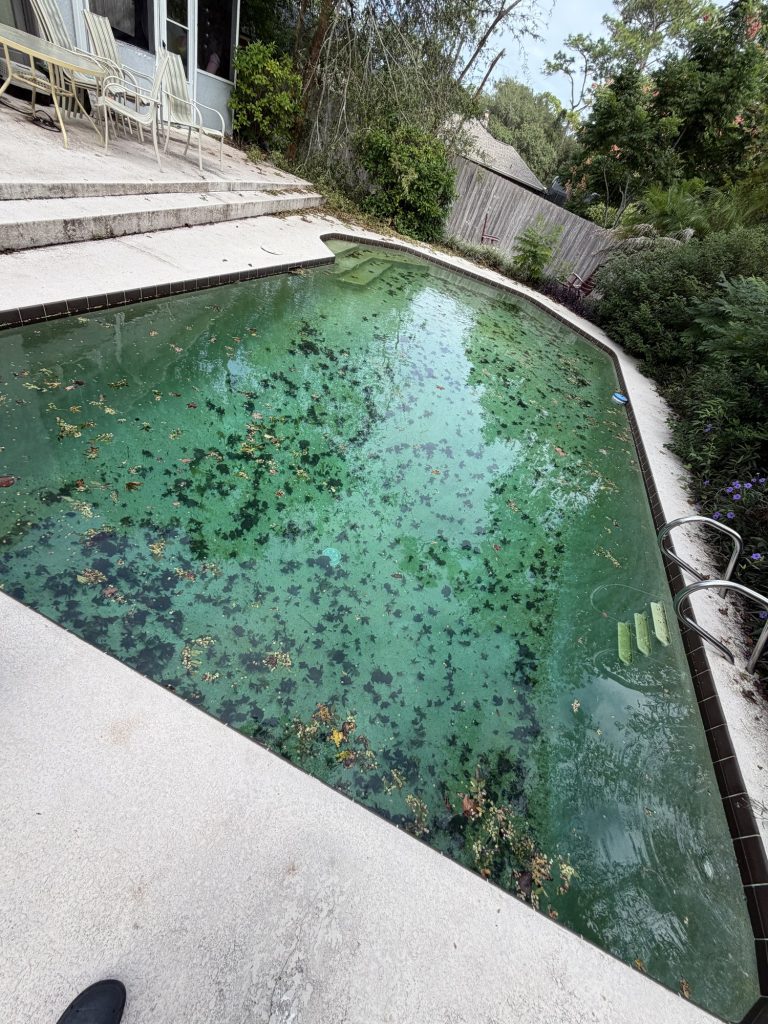
Cloudy and green are related, but they are not the same thing. Cloudy water is usually a mix of fine debris the filter has not caught yet and sanitizer that is running low. The water looks dull or milky, and you may not see the bottom drain clearly.
Green or teal water means algae has started to grow. Cloudiness after rain is often the step right before that. If you catch it while the water is still gray or milky, getting it clear is usually simpler. If it is already turning green, the job changes from clearing haze to killing algae, which is what our green pool cleanup service is for.
What Should I Check First After a Storm?
Work through these in order. Most of them take only a few minutes.
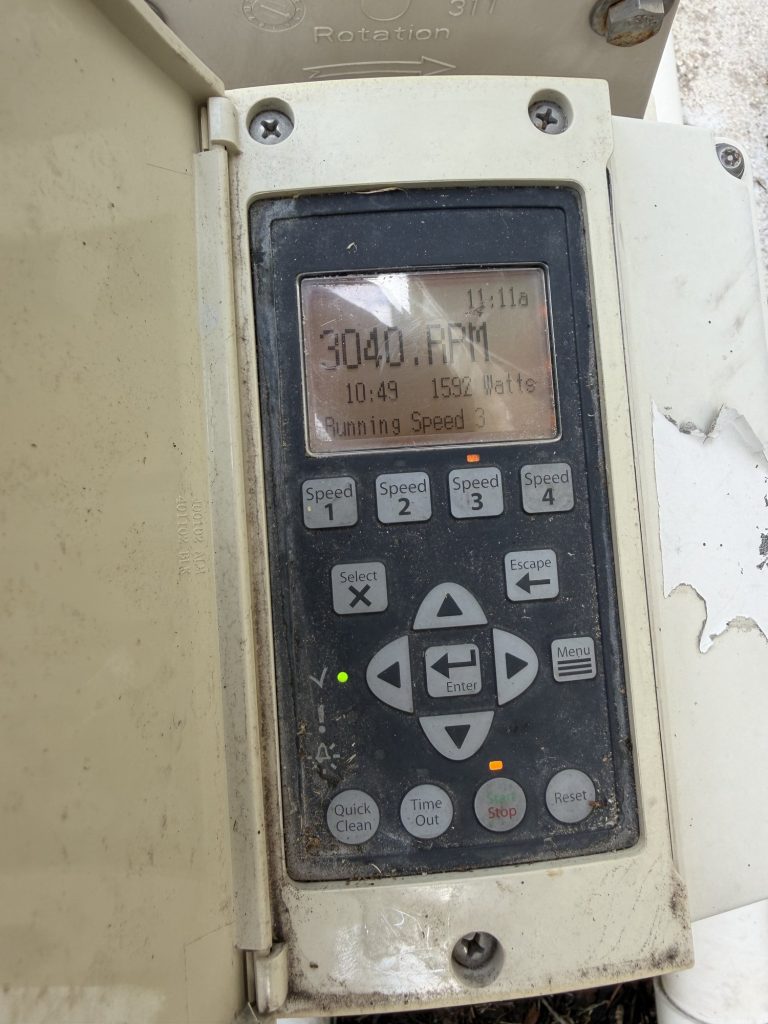
- Make sure the pump is running. Storms can trip a breaker or reset a timer. No circulation means no filtering and no mixing of chemicals.
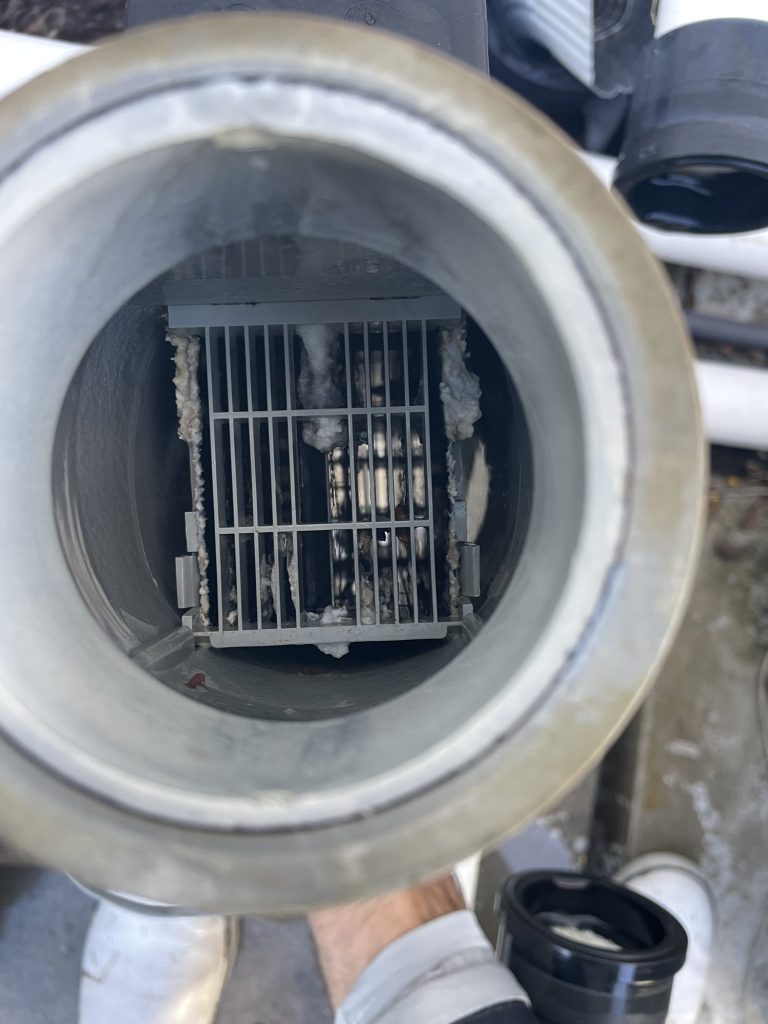
- Empty the skimmer and pump baskets. Leaves and debris from the storm can block flow and starve the pump.
- Check the water level. If the water is above the middle of the skimmer opening, the skimmer may not pull debris off the surface well.
- Look at the filter pressure gauge. A big jump after a storm means the filter is loaded with fine dirt and may need cleaning or backwashing.
- Test the water. At minimum, check free chlorine and pH. Alkalinity is worth checking too after heavy rain.
- Brush the walls and steps. This loosens anything settling on surfaces so the filter can catch it and the chlorine can reach it.
If the pump is off and you are not sure why, check the breaker once. If it trips again, leave it off and have a technician look at it. Do not keep resetting it.
How Do You Clear a Cloudy Pool After Rain?
Once the pump is running and the baskets are clean, the fix comes down to three things: filtration, sanitizer and balance.
Run the filter longer
Fine particles take time to catch. Running the pump for longer than usual for a day or two gives the filter more passes at the water. Clean or backwash the filter if the pressure is high, since a clogged filter cannot keep up.
Bring the chlorine back up
Rain thins out your sanitizer, and the debris that came in uses up even more. Raising free chlorine back into its normal range is often the single biggest step toward clear water. Always follow the product label, add chemicals to the pool water rather than adding water to chemicals, and never mix different pool chemicals together.
Get pH and alkalinity back in range
Chlorine works best when pH is in its normal range. If the storm knocked pH or alkalinity out of line, adjust those after you have tested, and retest the next day before adding more.
Give it time, then retest
A pool that was only mildly hazy often looks much better within a day once the filter and chlorine catch up. Heavier cloudiness can take longer. If the water is not improving after a couple of days of good filtration and proper chlorine, something else is going on, such as a filter problem or a starting algae bloom.
For a full look at what we test and how we bring water back into balance, see our pool chemical service.
Can I Swim in a Cloudy Pool?
It is best not to. If you cannot clearly see the bottom drain, a swimmer in trouble may not be visible, and that is a real safety concern. Cloudy water can also mean the sanitizer is too low to protect swimmers. Wait until the water is clear and the chlorine and pH test back in range.
How Can I Keep Rain From Clouding My Pool?
You cannot stop the rain, but you can make storms less disruptive. A few habits help:
- Keep chlorine in range before storm season. Water that goes into a storm with healthy sanitizer recovers faster than water that was already running low.
- Test after every heavy rain. In the summer, that might mean a few extra tests a week. It is the quickest way to catch a drop early.
- Point drainage away from the pool. Gutters, downspouts and sloped beds that empty toward the deck send runoff right into the water.
- Trim plants near the pool. Fewer leaves and flowers overhead means less debris and less pollen blowing in.
- Keep the filter clean. A clean filter has room to catch the fine dirt a storm brings in.
- Watch the water level. After several days of rain, lower the level if it is too high for the skimmer to work.
On weekly service, these checks happen as part of each visit, so the chemistry gets corrected on a regular schedule instead of only after you notice a problem.
Pool Cloudy After Rain FAQs
How long does it take a pool to clear after rain?
It depends on how cloudy it is, how clean the filter is and how far the chlorine dropped. A lightly hazy pool can clear in a day with good filtration and the right chlorine level. Heavier cloudiness takes longer, and water that has started turning green takes more work.
Should I shock my pool after it rains?
Raising chlorine after a heavy storm is often helpful, because rain and runoff use it up. Test first so you know how far it dropped, follow the product label, and avoid swimming until the level is back in a safe range.
Why does my pool get cloudy every time it rains?
If it happens after every storm, look at what the rain is bringing in. Runoff from the yard, overhanging trees, a filter that is already loaded, or chlorine that runs low between visits can all make a pool more sensitive to rain.
Can rain raise the pH in my pool?
Rain is usually slightly acidic, so it more often pulls pH and alkalinity down. Runoff from the deck or yard can push them in other directions. Testing after the storm is the only way to know which way your water moved.
Clear Water After the Next Storm
Summer rain is part of owning a pool in Wellington. Keeping the pump running, the filter clean and the sanitizer in range before and after each storm is what keeps a hazy pool from turning into a green one. If you would rather not chase the numbers after every downpour, AllBlu can test and balance your water on a regular schedule. Learn more about our pool chemical service and how we keep pools clear through storm season.