Quick Answer
Phosphates are a nutrient that algae feed on, and they wash into pools from fertilizer, landscaping, leaves, pollen and sometimes the fill water itself. In South Florida, spring adds heavy oak and pine pollen on top of that. Together they can leave a pool dull, hazy or coated with a yellow film, and they make it easier for algae to start. Steady chlorine, a clean filter and, when tests call for it, a phosphate remover keep spring water clear.
What Are Phosphates in a Pool?
Phosphates are compounds that contain phosphorus. Plants need phosphorus to grow, and algae are plants. That is the whole problem in one sentence: phosphates are food for algae.
On their own, phosphates do not make water dirty or unsafe. You cannot see them, and a pool can hold some without any trouble. The issue is what happens when chlorine slips. If sanitizer drops for a day because of heat, heavy swimming or a missed visit, algae that would normally be killed off find a well stocked pantry waiting for them. A pool low in phosphates is more forgiving. A pool full of them turns faster.
Where Do Phosphates Come From?
Most pools pick up phosphates a little at a time from the yard around them. Common sources include:
- Lawn and garden fertilizer. Granules blow onto the deck or wash in with runoff after watering and rain.
- Landscape mulch and soil. Planters close to the water drain into it during storms.
- Leaves, flowers and seed pods. As they break down in the water, they release nutrients.
- Pollen. Each grain carries a small load, and spring brings billions of them.
- Source water. Some fill water already contains phosphates, so topping off the pool adds more.
- Some pool products. Certain stain and scale treatments contain phosphates, which is one reason to read labels.
In Wellington, many backyards sit next to lush landscaping, hedges and big shade trees. That is great for privacy and shade, and it also means more organic material finds its way into the water.
Why Is Spring Pollen Season So Hard on Florida Pools?
South Florida does not get a hard winter, so pollen season starts early. Oaks and pines drop heavy pollen in late winter and spring, and it can coat cars, patios and screen enclosures in a matter of days. A pool is a large, flat, open target, so it collects a lot of it.
Pollen causes two separate problems:
- It makes a mess you can see. A fine yellow or green dust floats on the surface, collects along the waterline and settles on steps and benches.
- It feeds algae you cannot see yet. Pollen adds organic material and phosphates, uses up chlorine as it breaks down and gives algae a head start.
Screen enclosures help, but they do not stop pollen. The grains are small enough to pass through most screen mesh, and they also wash off the enclosure frame when it rains.
How Can You Tell Pollen From Mustard Algae?
This is one of the most common mix-ups we see in spring. Both can look like a yellow or greenish dust on the floor and walls of the pool, especially in shaded corners. They need different treatment, so it is worth a quick check.
Try the brush test:
- Brush the yellow area once. Pollen lifts easily and floats or spreads into a cloud, then usually returns to the surface or drifts toward the skimmer.
- Watch the spot for a day. If it was pollen and the filter is running, it should not come back to that same spot in the same shape.
- Check the surface film. Pollen often forms a skin on top of the water and a yellow ring at the tile line. Mustard algae lives on the walls and floor, not on top.
If the yellow patch keeps reappearing in the same shady place after brushing, it is more likely algae than pollen. We cover that problem in more detail in our guide to black and mustard algae.
How Do Phosphates and Pollen Make a Pool Cloudy?
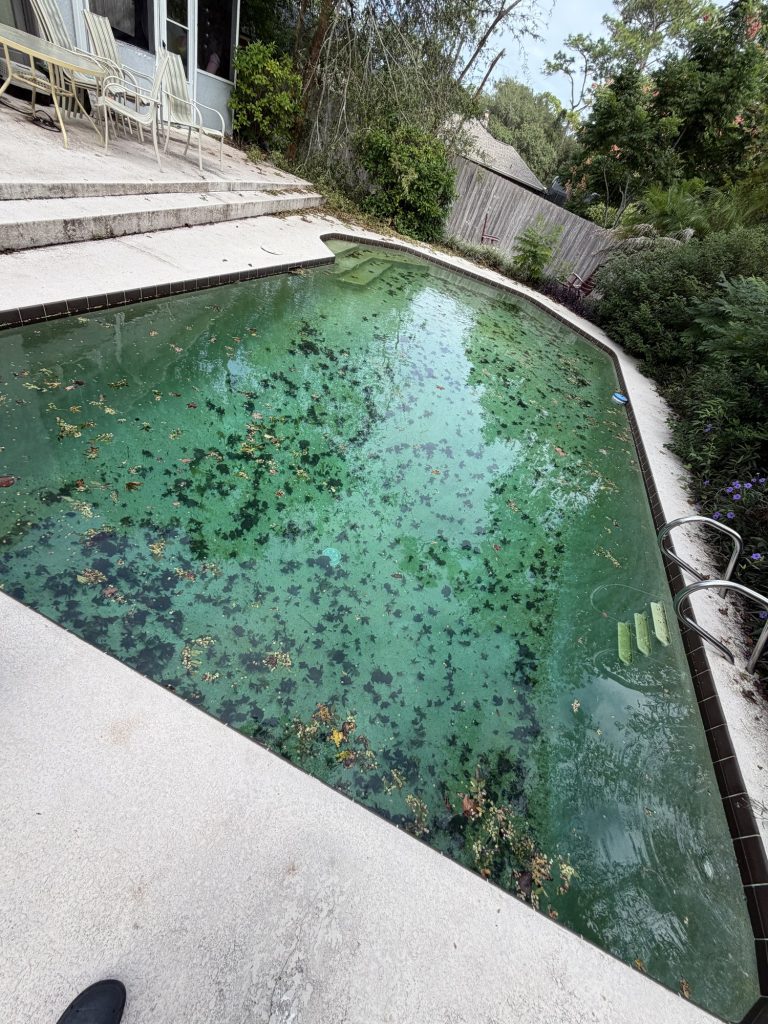
Fresh, sparkling water reflects light cleanly. Tiny particles floating in it scatter that light, which is what you see as haze. In spring those particles come from pollen dust, broken down leaves and the early stages of algae growth that has not turned the water green yet.
At the same time, all that organic material uses up chlorine. A chlorine level that held fine all winter can run low in a week of heavy pollen. Lower chlorine means less protection, and with phosphates on hand, the water can slide from dull to cloudy to faintly green.
What Is a Phosphate Remover and When Should You Use One?
A phosphate remover is a pool product that binds phosphates so the filter can catch them. It does not kill algae and it does not replace chlorine. Think of it as cleaning out the pantry so algae has less to eat.
Some practical points:
- Test before you treat. A phosphate test tells you whether the level is high enough to bother. Plenty of pools never need a remover.
- Follow the label exactly. Dose, timing and how long to run the pump vary by product, so the bottle is the guide.
- Expect the filter to work harder. The bound phosphates end up in the filter. Pressure often rises afterward, and the filter usually needs a cleaning.
- Keep chlorine steady first. A remover helps most in a pool that is already sanitized and balanced. On a green pool it is not the first step.
Phosphate removers can be useful in spring, after heavy landscaping work, or for pools that keep fighting algae even when chlorine looks fine.
Why Does the Filter Need Extra Attention After Pollen Season?
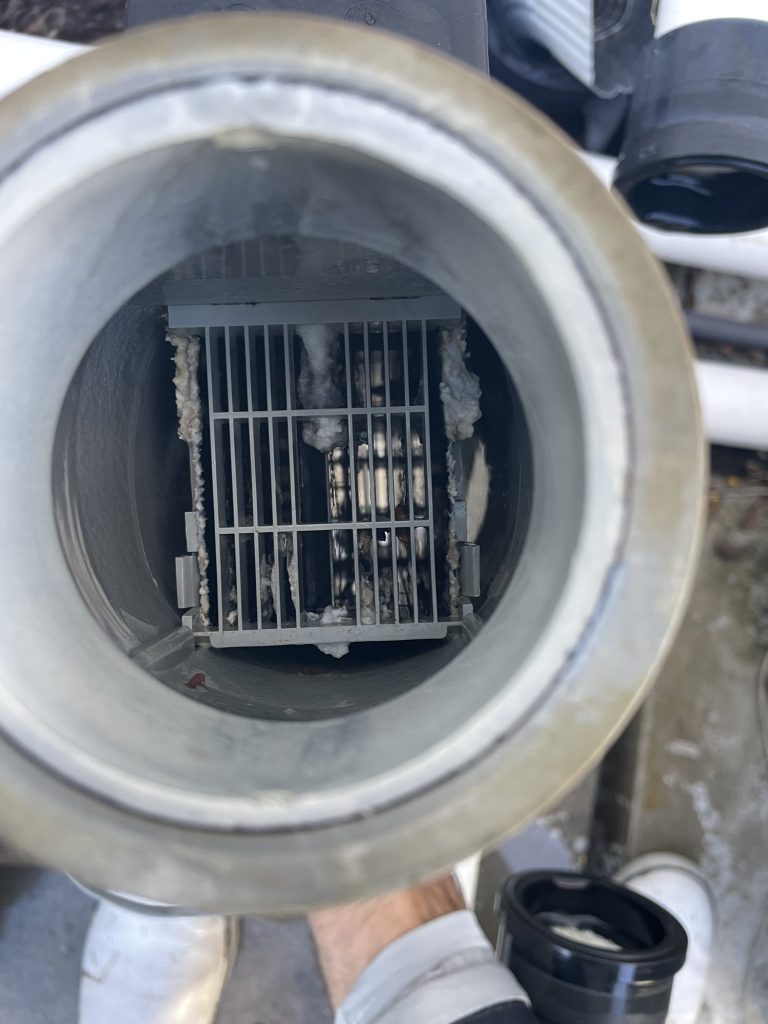
Pollen and phosphate treatments both end up in the same place: your filter. As the media loads up, flow drops, the pressure gauge climbs and the water does not turn over as well. A pool with a clogged filter can stay hazy even when the chemistry is right.
During heavy pollen weeks it helps to:
- Empty the skimmer and pump baskets more often.
- Watch the filter pressure gauge and clean or backwash when it rises well above its clean reading.
- Hose off the screen enclosure and deck so the next rain does not wash the pollen in.
- Run the pump a little longer each day until the surface stays clear.
If the haze hangs on after a good cleaning and a few days of steady chlorine, the water chemistry probably needs a closer look.
How Can You Keep Spring Pools Clear?
A few simple habits make pollen season much easier:
- Skim daily during peak pollen. Removing it from the surface before it sinks keeps it from breaking down in the water.
- Keep chlorine in range every day. Pollen and organic debris use it up faster than usual.
- Keep fertilizer away from the pool edge. Ask your landscaper to sweep granules off the deck and to avoid feeding beds that drain toward the water.
- Trim plants that hang over the pool. Less leaf and flower drop means fewer nutrients.
- Test for phosphates once or twice in spring. It tells you whether a remover is worth using.
Our pool chemical service tests and balances your water on a regular schedule, so pollen season does not catch you off guard. You can read more about what is included on our pool chemical service page.
Phosphates and Pollen FAQs
Are phosphates harmful to swimmers?
At the levels found in pools, phosphates are not considered a swimmer health concern. The problem is that they feed algae, which makes the water harder to keep clear and sanitized.
Will shocking the pool remove phosphates?
No. Shock raises chlorine to kill algae and break down organic material, but it does not remove phosphates. A phosphate remover and the filter do that job.
Can a salt pool still have phosphate problems?
Yes. A salt system makes chlorine, but it does nothing about phosphates. Pollen and runoff reach a salt pool the same way they reach any other pool.
How long does pollen season last in South Florida?
It varies from year to year with the weather, but oak and pine pollen is usually heaviest in late winter and spring. Grasses and other plants can add smaller amounts at other times of the year.
Clear Water Through Pollen Season
Pollen and phosphates are a normal part of owning a pool in Florida, not a sign that something is wrong. Skim often, keep chlorine steady, look after the filter and test before reaching for a phosphate remover. If spring keeps turning your water dull or yellow, AllBlu can take over the testing and balancing for you through our pool chemical service.