Quick Answer
Before you buy a home with a pool, look closely at the pool surface, tile and coping, signs of water loss, every piece of equipment on the pad, the screen enclosure and the safety features around the water. Ask the seller for service records and how old the equipment is. A general home inspection may only glance at the pool, so it is worth having a licensed home inspector and a pool technician both take a look before your inspection period ends.
Why Does the Pool Deserve Its Own Look?
In Wellington, the pool is often one of the most valuable features of the property, and one of the most expensive to fix. A cracked shell, a slow leak or a pump and heater near the end of their life can add up quickly after closing.
The challenge is that a pool can look perfect on a showing day. Clear blue water tells you someone cleaned it recently. It does not tell you how old the pump is, whether the pool loses water, or whether the heater still works. A focused pool check gives you facts to bring into your negotiation.
What Should You Look For on the Pool Surface?
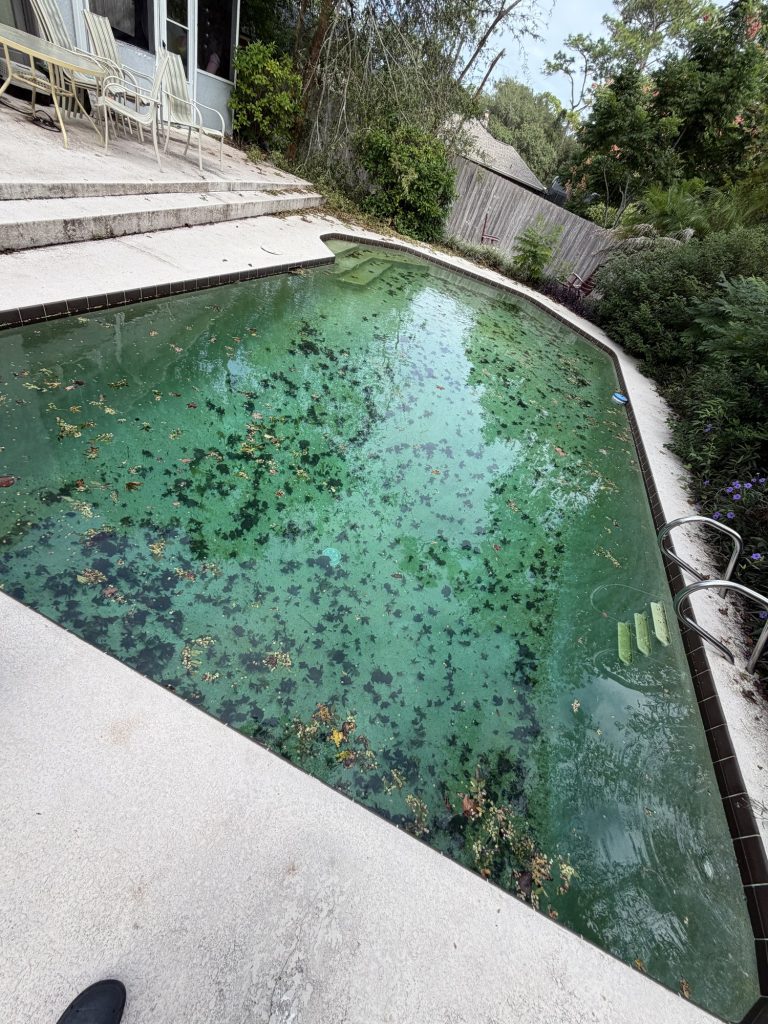
Walk the full edge of the pool in good daylight and look down at the walls, floor, steps and benches.
- Cracks. Fine surface crazing in older plaster is common. Larger cracks, especially ones that run in a line or show up in the same spot on the deck, deserve a closer look.
- Rough or worn finish. Plaster wears over time. Rough patches, exposed gray base material or a finish that feels like sandpaper on your feet usually point toward resurfacing in the coming years.
- Stains. Brown, green, blue or black stains can come from metals, leaves or algae. Some clean up easily and some point to a water chemistry history.
- Loose pebble or peeling paint. On pebble finishes, look for missing stones. On painted pools, look for flaking.
- Hollow spots. If you are allowed in the water, hollow sounding areas can mean the finish is separating from the shell.
What About the Tile and Coping?
The tile line and coping take a lot of sun, chemicals and water movement.
- Look for missing, cracked or loose tiles along the waterline.
- Check for white crusty buildup on the tile, which is scale from hard water or poor balance.
- Look at the coping stones or brick along the edge for cracks, loose pieces or gaps.
- Check the joint where the coping meets the deck. A wide gap can let water get behind the pool wall.
These repairs are rarely emergencies, but they belong on your list.
Are There Signs the Pool Is Losing Water?
A leak is one of the costlier surprises a new owner can find. A few clues are worth noticing:
- An automatic fill line or hose running to the pool when you visit.
- A water level that seems low compared to the skimmer opening.
- Soggy ground, sinkholes or unusually green grass near the pool or equipment.
- Cracks in the deck or separation around the skimmer or lights.
- Water around the equipment pad when nothing is being cleaned.
Ask the seller directly whether the pool needs regular topping off and whether there has ever been a leak repair. If anything seems off, a leak check before closing is much better than finding out after. Our page on pool leak detection explains what a leak check usually involves.
What Should You Check at the Equipment Pad?
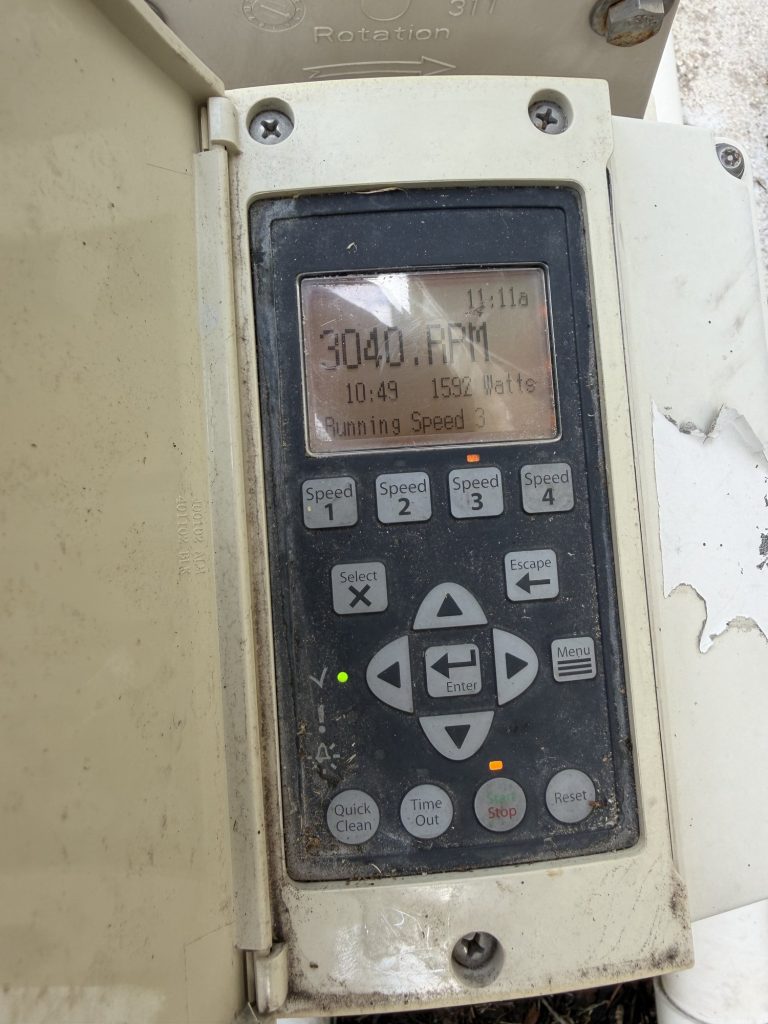
The equipment pad is where much of the pool’s value sits. Ask to see it with everything running.
Pump
- Listen for grinding, screeching or a loud hum.
- Look for drips under the pump or water around the base.
- Check the label for the model, and ask how old it is.
- Note whether it is a single speed or variable speed pump.
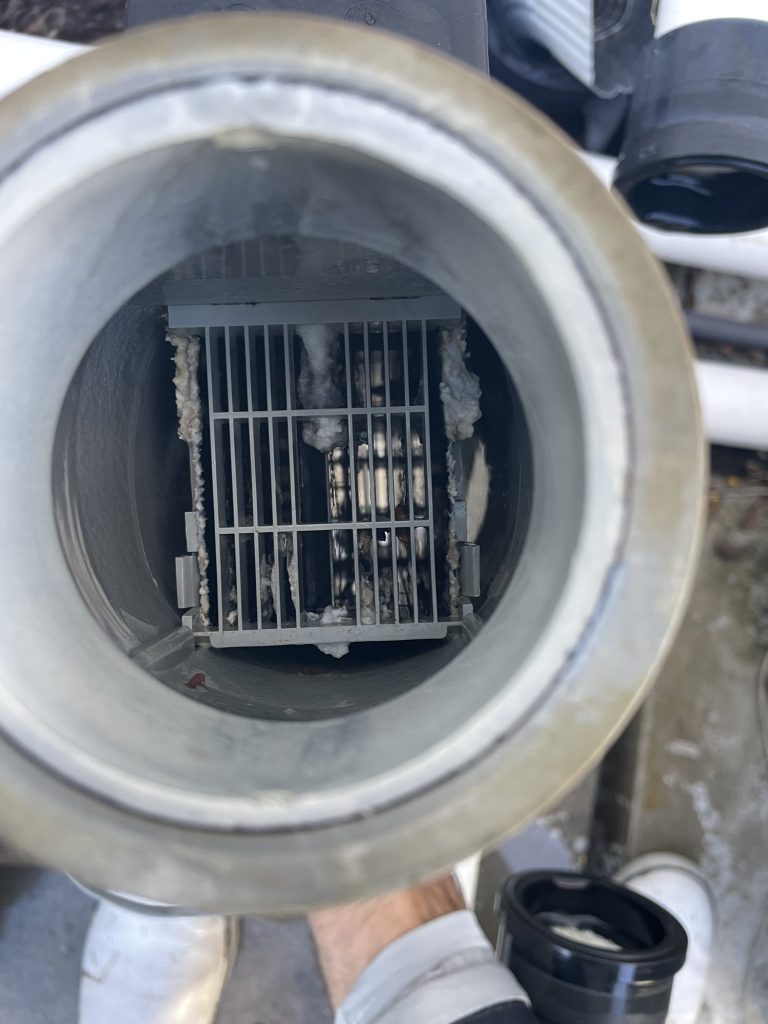
Filter
- Find out the filter type: cartridge, sand or DE.
- Look at the pressure gauge. A missing or broken gauge makes upkeep harder.
- Ask when the filter was last cleaned and when the cartridges or sand were last replaced.
- Look for cracks in the tank or leaks around the clamp or valve.
Heater
- Ask the seller to turn it on so you can confirm it runs and puts out heat.
- Note whether it is a heat pump or gas heater, and its age.
- Look for rust, corrosion or signs of rodents inside the cabinet.
Salt system and automation
- If the pool uses a salt system, ask how old the cell is. Cells wear out over time.
- Look at the control panel for warning lights or error codes.
- If there is an automation system, ask for the login or app details and confirm it controls the equipment.
Electrical and bonding
Look for exposed wires, missing covers, rust on electrical boxes and a breaker that trips. Pool electrical work and equipment bonding are safety items, so any concern should go to a licensed electrician or your home inspector, not a guess.
If several pieces of equipment are near the end of their life, that is useful information for your offer. Our pool equipment installation page covers what replacing a pump, filter, heater or other equipment involves.
Is the Screen Enclosure in Good Shape?
Most Wellington pools sit under a screen enclosure, and replacing screen panels or repairing a frame adds up.
- Look for torn or sagging panels and loose spline.
- Check the frame for bent members, corrosion or loose bolts.
- Open and close the doors. Make sure they latch.
- Look at the kick plates along the bottom for gaps where animals can get in.
What About Safety Features Around the Pool?
Florida has rules about safety features for residential pools, especially for homes with young children. The details depend on the home and when the pool was built, so ask your home inspector, real estate agent or the seller what is in place and what is required.
Things to check on your walk through:
- Door and window alarms, if any, and whether they work.
- Self closing and self latching gates or doors that lead to the pool.
- Any pool fence, barrier or safety cover, and its condition.
- Drain covers that look intact and secure.
If you plan to have young children or grandchildren visit, this part of the check matters most.
What Records Should You Ask the Seller For?
Paperwork can tell you a lot that a walk around cannot.
- Recent pool service invoices or the name of the current service company.
- Dates and receipts for equipment replacement, resurfacing or tile work.
- Any leak detection or repair history.
- Warranty papers for equipment that is still covered.
- Permits for the pool, the enclosure or major equipment changes.
A pool that has been on regular weekly service usually has a clearer history than one that has been cared for off and on.
Should You Get a Pool Specific Check Before Closing?
A licensed home inspector is the right person for the home as a whole, and many will note obvious pool issues. A pool technician spends every day around pumps, filters, heaters and finishes, so they can add detail the general report may not cover.
You can ask a pool service company to take a look at the equipment, the water and the pool itself before your inspection period ends. That is not a substitute for a formal home inspection, but the two together give you a much fuller picture. If you are buying in Wellington, AllBlu can look over the pool and equipment and tell you what we see. If a pump problem turns up, our pool pump repair page explains the usual fixes.
Buying a Home With a Pool FAQs
Does a standard home inspection cover the pool?
Some home inspectors include a basic pool check and some charge extra or leave it out. Ask what is included before you schedule.
Can I check for a leak before I buy?
You can look for the signs listed above and ask the seller about water loss. A bucket test takes about a day and may not be practical during a short showing, so ask whether the seller will allow one or a leak check during your inspection period.
What should I do if the equipment is old?
Write down the model and age of each piece, ask for service records and get an idea of replacement costs. That information can help you negotiate or plan a budget for after you move in.
What should I do with the pool right after closing?
Set up regular service or a care routine right away. Test and balance the water, clean the filter, and learn how the equipment and automation work so small issues do not grow while you settle in.
Start Ownership With Clear Answers
A home with a pool is a great fit for Wellington living, and a careful check before closing helps you enjoy it without surprises. Look at the surface, tile, equipment, enclosure and safety features, ask for records, and bring in both a licensed home inspector and a pool technician. If you have questions about a pool you are thinking of buying, AllBlu is happy to help you understand what you are looking at.