Quick Answer
Black and mustard algae come back because a normal shock only reaches the part you can see. Black algae grows roots down into plaster and grout, and mustard algae survives on shaded walls and on swimsuits, toys and pool gear that go back in the water. Beating them takes hard brushing, a strong treatment held for several days, and cleaning everything that touches the pool, not just the water.
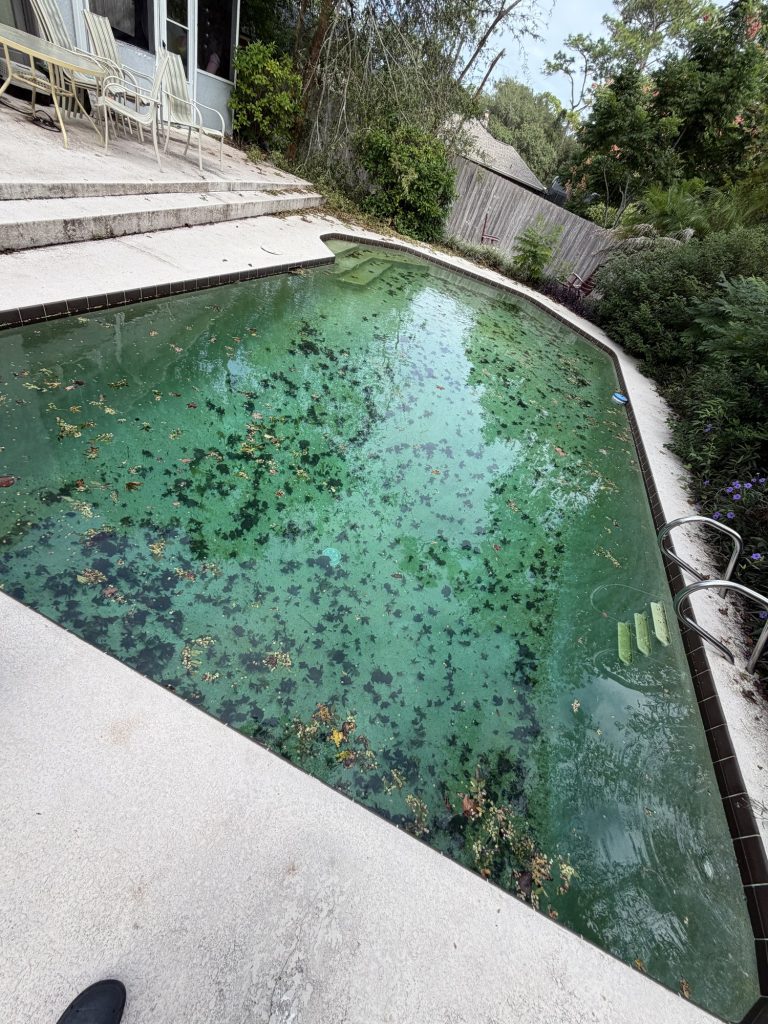
If you have treated the same dark spots or yellow dust three or four times and they keep showing up again, you are not doing it wrong. These two types of algae are simply tougher than the green kind that clouds the water. Here is how each one hangs on, and what it takes to get rid of it for good.
How Is Black Algae Different From Regular Algae?
Black algae is not really black. It is a dark blue-green colony that forms small, raised spots, usually about the size of a pencil eraser or a coin. You find it most often in plaster pools, in cracks, along grout lines, on rough steps and around fittings.
What makes it so stubborn is how it is built. Each spot has a protective outer layer that sheds chlorine, and underneath that layer it sends tiny roots into the pores of the plaster. When you shock the pool, the chlorine may bleach the top of the spot. The spot fades, you think it is gone, and a few weeks later it darkens again from the roots that never died.
A few signs point to black algae rather than a stain:
- The spots feel slightly raised or rough when you rub them.
- They do not wipe away with your hand.
- They are darker at the center and grow outward over time.
- They show up first in shady or low-flow areas, like steps and corners.
Why Does Mustard Algae Keep Returning?
Mustard algae looks like yellow, tan or light brown dust sitting on the walls or floor, usually on the shady side of the pool. When you brush it, it clouds up into the water and seems to disappear. Then it settles right back down a day or two later.
Mustard algae is chlorine tolerant. It can survive at chlorine levels that would wipe out green algae. It also hitchhikes. Spores cling to:
- Swimsuits that were worn in a lake, the ocean or another pool
- Pool toys, floats and noodles
- Brushes, nets and vacuum heads
- The inside of the skimmer, the pump basket and the filter
- Robotic or automatic pool cleaners
So even if you kill every bit of it in the water, a float stored in the garage or a brush that never got cleaned can put it right back.
Why Does Treating the Surface Not Work?
Most homeowners fight these algae the same way they would fight green water: add shock, wait a day, and look again. That works for floating algae. It falls short here for a few reasons.
The chlorine never reaches the roots
A shock raises chlorine for a short time, then the Florida sun and heat burn it back down. Black algae’s outer layer protects it long enough to ride out that spike. Unless the layer is broken open by brushing, the chlorine mostly works on the surface.
The level drops too soon
Stubborn algae needs high chlorine held steady for several days, not one big dose that fades by the next afternoon. When the level falls back to normal, whatever survived starts growing again.
High stabilizer slows everything down
Stabilizer protects chlorine from the sun, but too much of it makes chlorine weaker at killing algae. Pools that use stabilized tablets for years often have stabilizer high enough that even a big shock struggles. Testing stabilizer before treatment tells you whether the chemistry can win at all.
The filter and gear stay contaminated
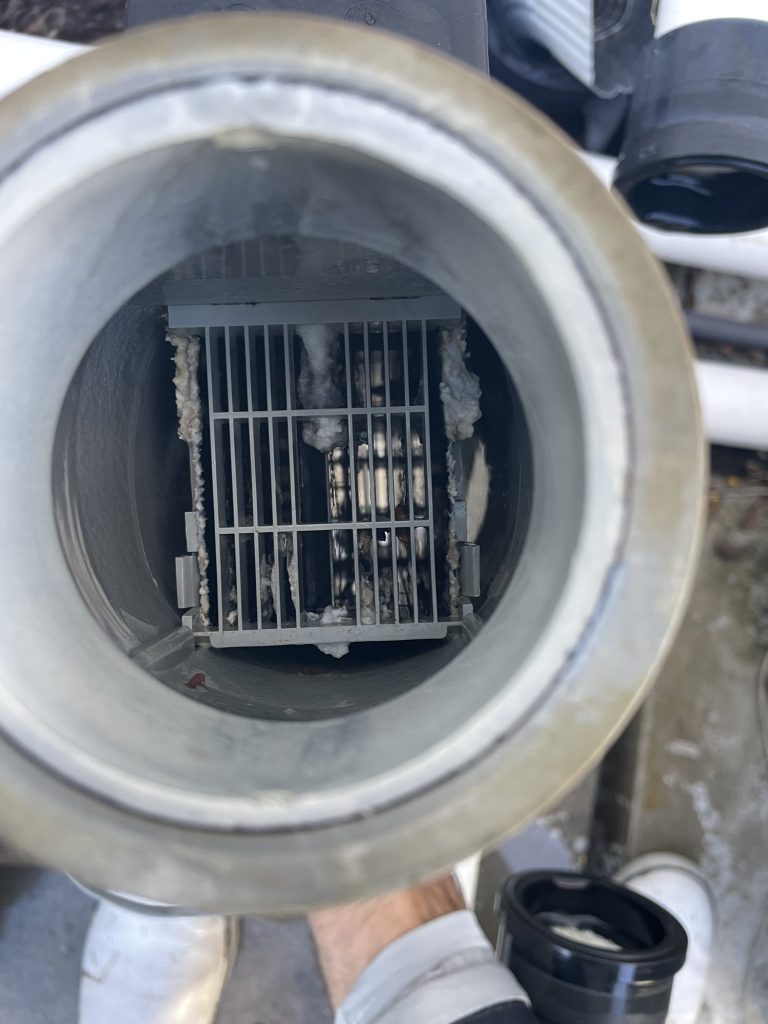
Mustard algae that was brushed loose gets trapped in the filter. If the filter is not cleaned well after treatment, some of it ends up back in the pool.
How Do You Actually Get Rid of Black Algae?
Black algae is a brushing job first and a chemical job second. The general approach looks like this:
- Test and balance first. Bring pH into range and check stabilizer, so the chlorine you add can actually work.
- Brush the spots hard. A stainless steel brush works on plaster. Do not use steel on vinyl liners, fiberglass or painted surfaces, which need a nylon brush. The goal is to scrape open the protective layer on every spot.
- Treat the spots directly. Many people rub the spots with a chlorine tablet or a spot treatment made for black algae. Always follow the product label and wear gloves and eye protection.
- Raise the chlorine and hold it. Shock the whole pool according to the label for your pool size, then keep chlorine high for several days instead of letting it drift down.
- Brush again every day. Each brushing opens up more of the colony so the chlorine can get deeper.
- Run the pump longer and clean the filter. Good circulation carries chlorine to the corners where black algae likes to live.
- Watch the old spots. If a spot comes back in the same place, it means roots survived. Repeat the brushing and spot treatment there.
In plaster with deep cracks or very old, rough finish, black algae can be hard to remove completely. In those cases a resurfacing job down the road may be the only permanent fix, but that is a decision to make after a thorough treatment, not before.
How Do You Get Rid of Mustard Algae?
Mustard algae takes the same chemistry, plus a cleanup of everything that has touched the water.
- Brush every surface, paying extra attention to shady walls and the floor under ladders and steps.
- Raise chlorine and hold it for several days, following the product label.
- Clean the filter thoroughly after the treatment. Cartridges should be cleaned well or replaced if they are worn. Sand and DE filters need a full backwash and recharge.
- Sanitize your pool gear. Soak brushes, nets, vacuum heads and hoses in a chlorine solution, or put them in the pool during the high chlorine treatment.
- Wash swimsuits and towels before anyone swims again, especially suits worn in lakes or the ocean.
- Clean or treat toys and floats, or toss old ones that are hard to clean.
- Check the automatic cleaner. Its bag, brushes and hoses can hold spores.
If you skip the gear and the filter, it is very common to see the yellow dust again within a couple of weeks.
Why Are These Algae Common in Florida?
Warm water, long swim seasons and lots of shade from palms and screen enclosures all help these two types settle in. Pools here rarely get a cold rest period, so the algae never gets knocked back by the weather. Heavy summer rain also dilutes chlorine just long enough for a hidden colony to grow a little more each time.
Shaded areas matter most. A corner that never gets direct sun, a step under a lanai roof or a wall behind a planter stays cooler and loses chlorine more slowly in some spots and less evenly in others. That uneven water is where mustard and black algae like to start.
How Do You Keep Them From Coming Back?
Once the pool is clear, prevention is mostly about steady habits:
- Brush the walls, steps and corners every week, not just the floor.
- Keep free chlorine steady instead of letting it swing low between visits.
- Test stabilizer a few times a year so it does not creep too high.
- Run the pump long enough to move water into the shady spots.
- Rinse swimsuits and gear that have been in lakes, the ocean or other pools.
- Clean the filter whenever the pressure gauge climbs well above its clean reading.
If you would rather hand off the fight, our green pool cleanup service covers stubborn algae, including the brushing, filter cleaning and follow-up visits these types usually need.
Black and Mustard Algae FAQs
Is black algae dangerous to swim in?
The algae itself is not usually the main concern, but a pool that grows it may have weak spots in its sanitation. During treatment, chlorine levels are kept high, so stay out of the pool until levels return to the normal swimming range on the product label.
Can black algae damage my pool?
Over time it can. The roots work into plaster and grout and can make rough spots rougher. Treating it early keeps the damage small.
How do I know if it is mustard algae or just dirt?
Brush it. Dirt usually stays down or goes into the vacuum. Mustard algae clouds up easily, looks yellow or tan in the water and settles back on the shady side within a day or two.
Do I need to drain the pool to get rid of black algae?
Usually not. Most black algae can be controlled with brushing and a strong, steady treatment. Draining a pool in South Florida has its own risks, so it should only be done with professional advice.
Will a salt pool still get black or mustard algae?
Yes. A salt system makes chlorine, but if output is low, stabilizer is high or there are shady dead spots, these algae can still get started.
Winning the Long Game
Black and mustard algae are not a one-day fix. They take hard brushing, steady chemistry held for several days, and a cleanup of the filter and everything that goes in the pool. Do all three and they stop coming back. If you keep losing the battle in Wellington or nearby, AllBlu can take it from here.