Quick Answer
After a storm, deal with safety before the water. Stay away from downed lines, and do not turn power back on to pool equipment that sat in standing water until someone has checked it. Then work in order: pull out the big debris, empty the baskets, fix the water level, get the filter running, test and rebalance, brush, and shock last. Most pools recover in a few days with steady work. If the equipment flooded, the pump will not start, or the water turned dark green, that is the point to bring in help.
A tropical storm or a strong summer squall can leave a Wellington backyard looking like a different place. Palm fronds in the deep end, oak leaves packed into the skimmer, sand and mulch on the floor, and water lapping at the top of the tile. The good news is that a pool is tough. The order you clean it up in matters more than how fast you start.
Step 1: Is It Safe to Go Near the Pool?
Before you touch a skimmer net, walk the yard with your eyes open.
- Look for downed or sagging power lines. If a line is on the ground, near the fence or touching the pool cage, stay back and report it to the power company.
- Check the equipment pad. If your pump, heater, timer or automation panel sat in standing water, leave the power off at the breaker. Water inside a motor or a control box can cause a short or a shock when power returns.
- Watch for damaged screens and cage panels. Bent aluminum and torn screen can drop without warning. Keep kids and pets out of the area until it has been checked.
- Mind the deck. Wet leaves on pavers and travertine are slick, and storms can loosen coping stones.
If you are not sure whether something got wet, treat it as if it did. A flooded motor that gets switched on can turn a cleaning job into a replacement.
Step 2: Get the Big Debris Out First
With the area safe, start with what you can see.
Use a leaf rake net, the deep bag style, to pull out fronds, branches and clumps of leaves. Do this before you run the pump. Large debris that gets sucked into the skimmer can jam the basket, choke the impeller or crack a lid.
Work from the surface down. Skim what is floating, then go after what sank. Leaves that sit on the floor for days stain plaster and feed algae, so it is worth getting them out early even if the water still looks murky.
Toss storm debris into yard waste, not back onto the deck where the next breeze will blow it in again.
Step 3: Empty the Skimmer and Pump Baskets
Storm debris finds its way into every basket in the system. With the power off:
- Empty the skimmer baskets.
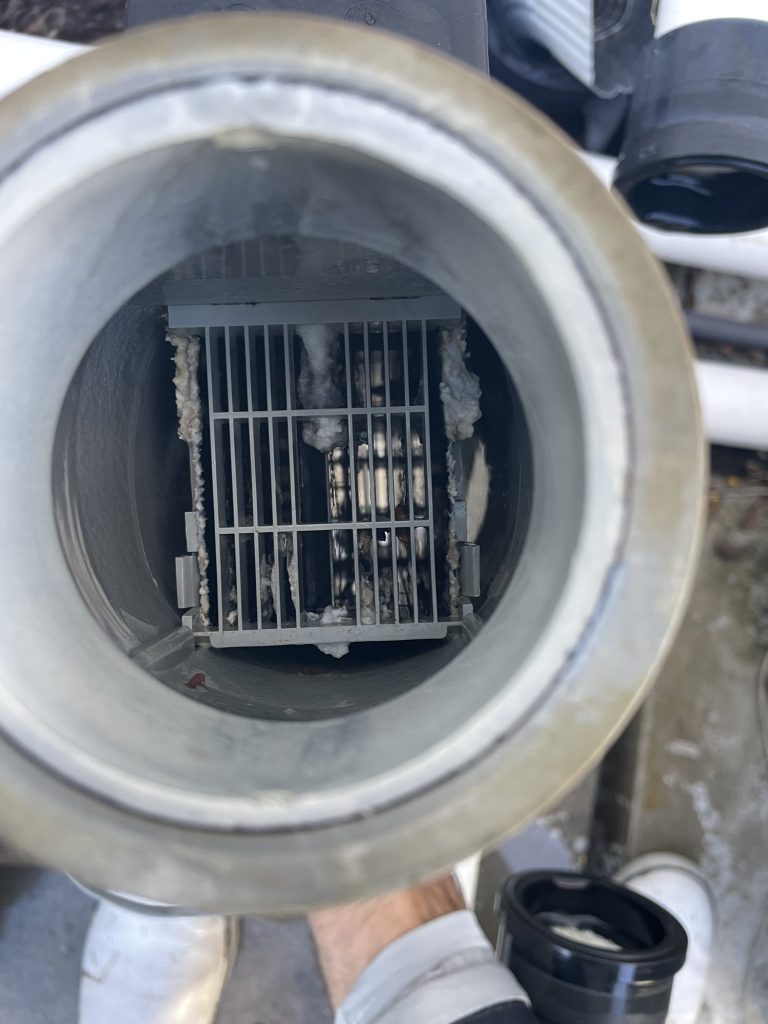
- Open the pump lid and clear the pump basket.
- Check the lid O-ring for sand or grit before closing it. A dirty O-ring is one of the most common reasons a pump will not hold prime after a storm.
If your pool has a robotic or suction cleaner, pull it out, clean its bag or canister, and keep it out until the heavy debris is gone. Sending a cleaner into a pool full of branches mostly gets you a clogged cleaner.
Step 4: Check the Water Level
Heavy rain can push a pool well above its normal line. Water that rises over the skimmer opening stops the skimmer from pulling surface debris, and in a very full pool water can spill onto the deck and toward the house.
Lower the level until it sits around the middle of the skimmer opening. Depending on your setup, that may mean a waste or backwash setting on the filter valve, or a submersible pump with a hose run to an area that drains away from the house. Follow your local rules for where pool water can go.
Do not drain the pool down further than that. Florida’s water table often rises after big storms, and an empty or nearly empty pool shell can be pushed up by groundwater. That kind of damage costs far more than any cleanup.
Step 5: Restart the Equipment Carefully
Only turn the system back on if the equipment pad stayed dry, or after a qualified person has checked anything that got wet.
When you power up:
- Make sure the valves are set to normal filtering and the baskets are back in place.
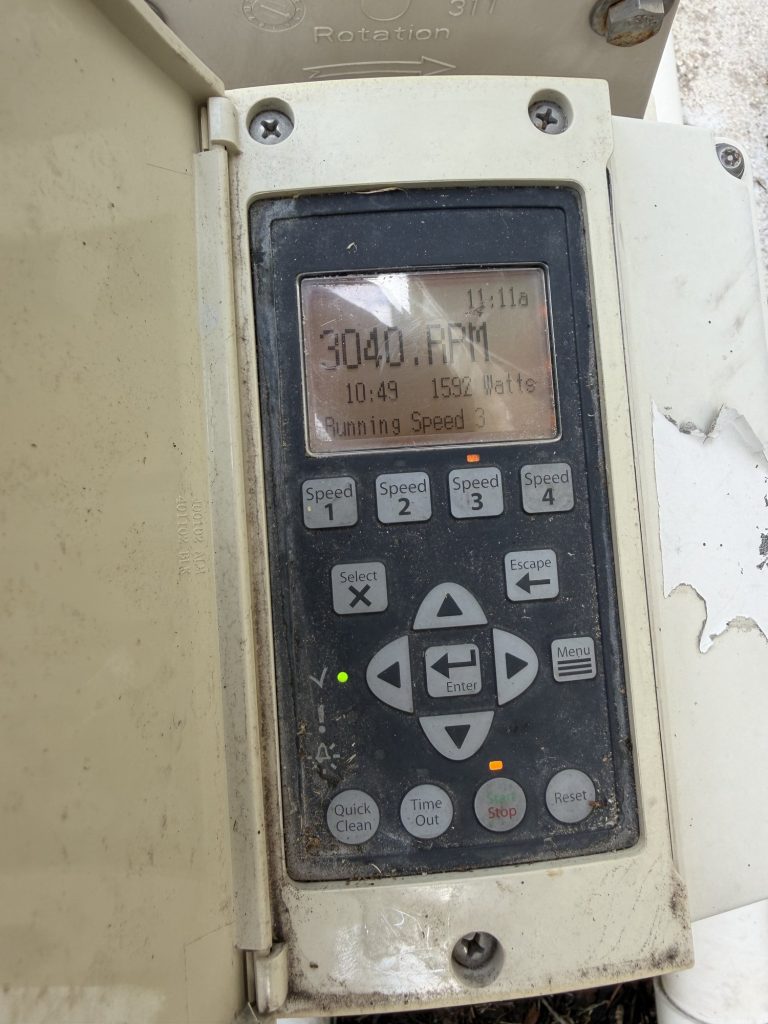
- Watch the pump basket fill with water. If it keeps sucking air, shut it off and check the lid and water level again.
- Listen for anything new: grinding, humming without spinning, or a breaker that trips. Any of those means stop and get it looked at.
- Note the filter pressure. A big jump above your normal clean reading means the filter is loading up with storm dirt.
Plan to run the filter around the clock for the first day or two. Storm water brings in a lot of fine dirt, and the filter needs time to catch it.
Step 6: Test and Rebalance the Water
Rain is soft and slightly acidic, and a storm can add a lot of it at once. That dilutes chlorine, shifts pH and alkalinity, and brings in organic debris and phosphates that use up sanitizer quickly.
Test after the big debris is out and the water has circulated for a few hours. Adjust in this order:
- Alkalinity first, since it steadies pH.
- Then pH.
- Then chlorine.
Add one chemical at a time, with the pump running, and give each one time to mix before you add the next. Never mix chemicals together in a bucket. Always add chemicals to water, never water to chemicals, and follow the label.
If your pool is a saltwater pool, check the salt level too. A lot of rain can drop it below the range your system needs to make chlorine.
Step 7: Brush, Then Shock
Once the water is circulating and roughly balanced, brush the walls, steps and floor. Storms leave a film of dirt and pollen on every surface, and brushing loosens it so the filter can catch it and the chlorine can reach anything trying to grow.
Shock last, ideally in the evening. The sun burns off chlorine quickly, so an evening dose gets more hours of work. Keep the pump running overnight, and retest the next day.
Expect to vacuum more than once. Fine debris keeps settling for a day or two after a storm.
How Long Does It Take a Pool to Recover After a Storm?
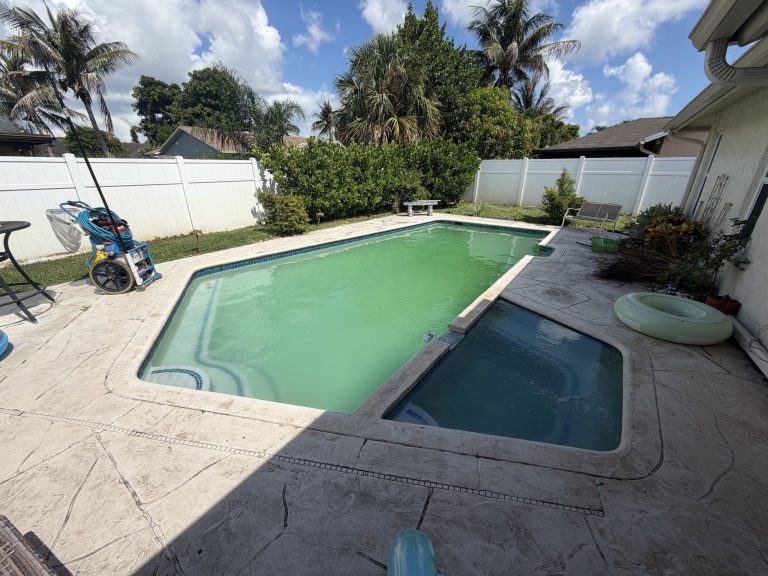
It depends on how much debris went in, how long the pool sat, and whether the equipment kept running. A pool that caught a few leaves and some rain may look normal in a day. A pool that sat for several days with no power, full of leaves, in summer heat can turn green and take longer.
Things that slow recovery down:
- A dirty filter that needs cleaning partway through.
- High phosphates from leaves and mulch.
- Equipment that cannot run until it is repaired.
- Water that was left green for a week or more.
If you are a few days in and the water is not improving, something is usually still wrong with circulation or filtration.
When Should You Call a Pro After a Storm?
Some storm cleanup is a good weekend job. Some is not. Call for help if:
- The equipment pad flooded or the pump, heater or controls sat in water.
- The pump will not start, hums, or trips the breaker.
- The pool turned dark green or black and you cannot see the floor.
- There is more debris than you can safely handle, like large branches or a damaged cage.
- You are out of town and the pool is sitting untouched.
AllBlu handles storm cleanup and debris removal for pools in Wellington and nearby Palm Beach County communities. If the water has already turned, our green pool cleanup service brings it back. If the equipment is down, our emergency pool repair team works to get pumps and motors running again, often the same day when the schedule allows. We do not offer 24-hour service, so after a big storm it helps to reach us early in the day.
After-Storm Pool FAQs
Should I run my pool pump during a storm?
If power stays on and the equipment is not at risk of flooding, running the pump helps keep the water moving. If lightning is close or the pad could flood, it is safer to turn it off at the breaker and restart once the storm passes and everything is dry.
Can I swim right after a storm?
Wait until the debris is out, the water is clear, and the chlorine and pH are back in range. Storm runoff can carry dirt, yard chemicals and bacteria into the pool, so give it time.
Do I need to drain my pool after a storm?
No. Lower it to the normal level and treat the water. Draining a pool in South Florida is risky because groundwater can push on an empty shell.
Why does my pump keep losing prime after a storm?
The usual causes are a water level that is too low or too high, a basket packed with debris, or grit on the pump lid O-ring. Clean the lid and O-ring, check the level, and try again.
Is it worth having a pool service do storm cleanup?
If the pool only caught some leaves, you can likely handle it. If the equipment got wet, there is heavy debris, or you are away, having a pool service do it saves time and protects the equipment.
Getting Back to a Clean Pool
The storm part is over in a few hours. The cleanup is what decides how fast you get back in the water. Start with safety, work through the steps in order, and do not rush the equipment back on if it got wet. If you would rather hand it off, AllBlu can take care of the cleanup so you can focus on the rest of the yard.